A while ago, I decided to make a quick pasta dinner just something easy for me to cook. I opened the pantry to grab a can of tomatoes, and what should have taken a few seconds turned into minutes.
As I dug through the shelves, I found all sorts of things I had completely forgotten about. There were multiple cans of the same item, half-empty bags of food shoved behind newer purchases, and a few things that had been sitting there far longer than they should have. The tomatoes I needed were buried all the way in the back behind everything else.
Standing there, I realized the pantry wasn’t working for me at all. I was wasting time looking for ingredients, buying things I already had, and dealing with unnecessary clutter every time I wanted to cook. So I decided it was finally time to get organized and create a system that actually made sense.
It made a huge difference because when your pantry is organized, you can see exactly what you have, use ingredients before they go to waste, and put meals together much more easily. Cooking feels less stressful, shopping becomes simpler, and everything is right where you expect it to be.
So if your pantry is currently in any kind of chaos, this guide is for you. We are starting completely from scratch and building a system that actually works for real life. And since your pantry does not exist in isolation, it is worth pairing this with the best way to organize your kitchen cabinets so you can actually find everything so your whole kitchen works together as one cohesive system.
Let’s get into it.
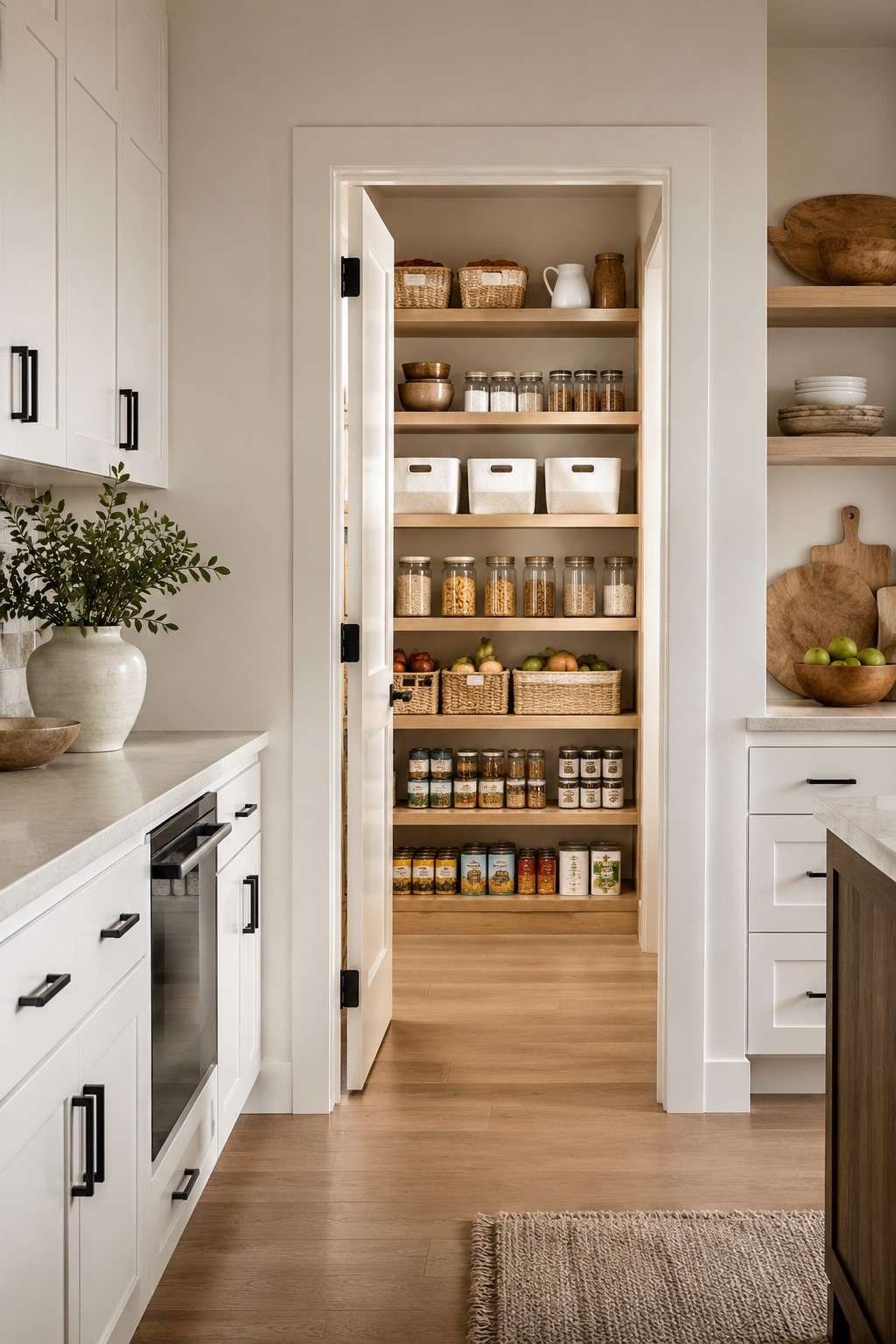
First Things First, Empty Everything Out
I know this feels counterintuitive. It feels like you are making more mess. But you absolutely cannot build a proper system around existing chaos. You need a clean slate.
Pull every single thing out of your pantry and put it all on your kitchen table or counter. Every can, every packet, every bottle, every jar. Everything comes out.
What to Do as You Empty Your Pantry
Check every single expiry date as you pull things out. Be ruthless here. If it is expired, throw it away without guilt. Check for anything that has been open for too long. Spices lose their flavour after about a year. Opened packets of grains and flour can go stale or attract pests.
Group similar things together as they come out. Canned goods in one pile. Pasta and grains in another. Snacks in another. Baking supplies together. Sauces and condiments together.
By the time your pantry is completely empty you will have a very honest picture of what you actually own. Most people are genuinely surprised. You will probably find things you forgot you had, things you bought twice, and things you have absolutely no memory of purchasing.
Once everything is out, wipe down every shelf before anything goes back in. A clean surface makes the whole process feel more intentional and fresh.

Sort Everything Into Clear Categories
Before anything goes back into the pantry, you need to decide on your categories. These are the groups that everything in your pantry will belong to from this point forward.
Your categories do not have to match anyone else’s. They need to match how you actually cook and eat. But here is a framework that works really well for most households.
A Category System That Works for Almost Every Kitchen
Canned and jarred goods which includes tinned tomatoes, beans, coconut milk, tuna, sauces and anything else in a can or jar. Pasta, rice and grains which covers all your dry carbohydrates.
Baking supplies which includes flour, sugar, baking powder, cocoa, vanilla and anything else you use when baking. Snacks which is everything from crackers and crisps to nuts, dried fruit and granola bars.
Breakfast items like oats, cereals, pancake mix and any other morning staples. Condiments and sauces which covers cooking sauces, vinegars, oils and anything you add to food while cooking. Spices and seasonings which deserve their own dedicated spot. Drinks like tea, coffee, hot chocolate and any other pantry beverages.
Write these categories down before you start putting things back. Having them clear in your head makes the whole process so much smoother.
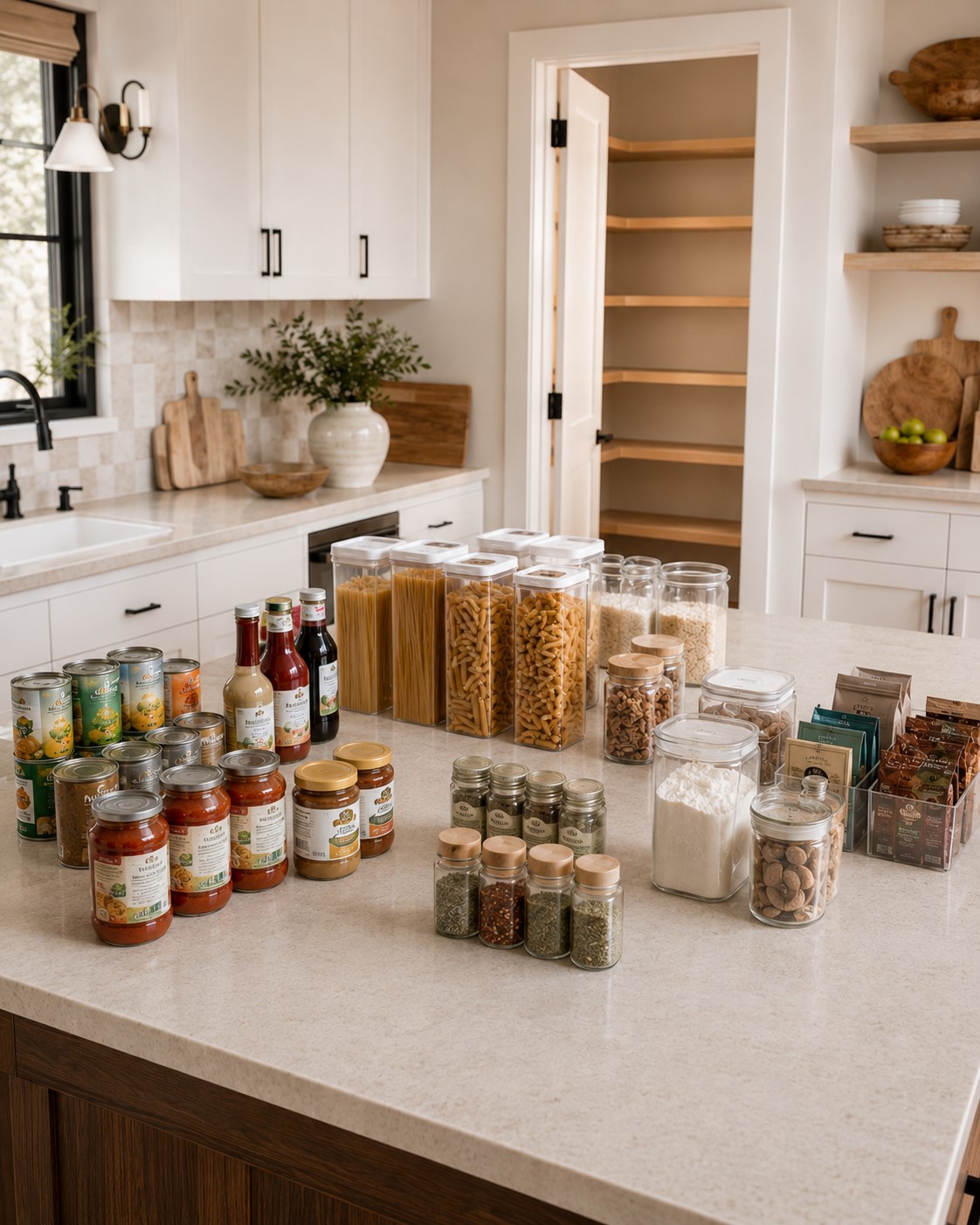
Choose the Right Storage Containers
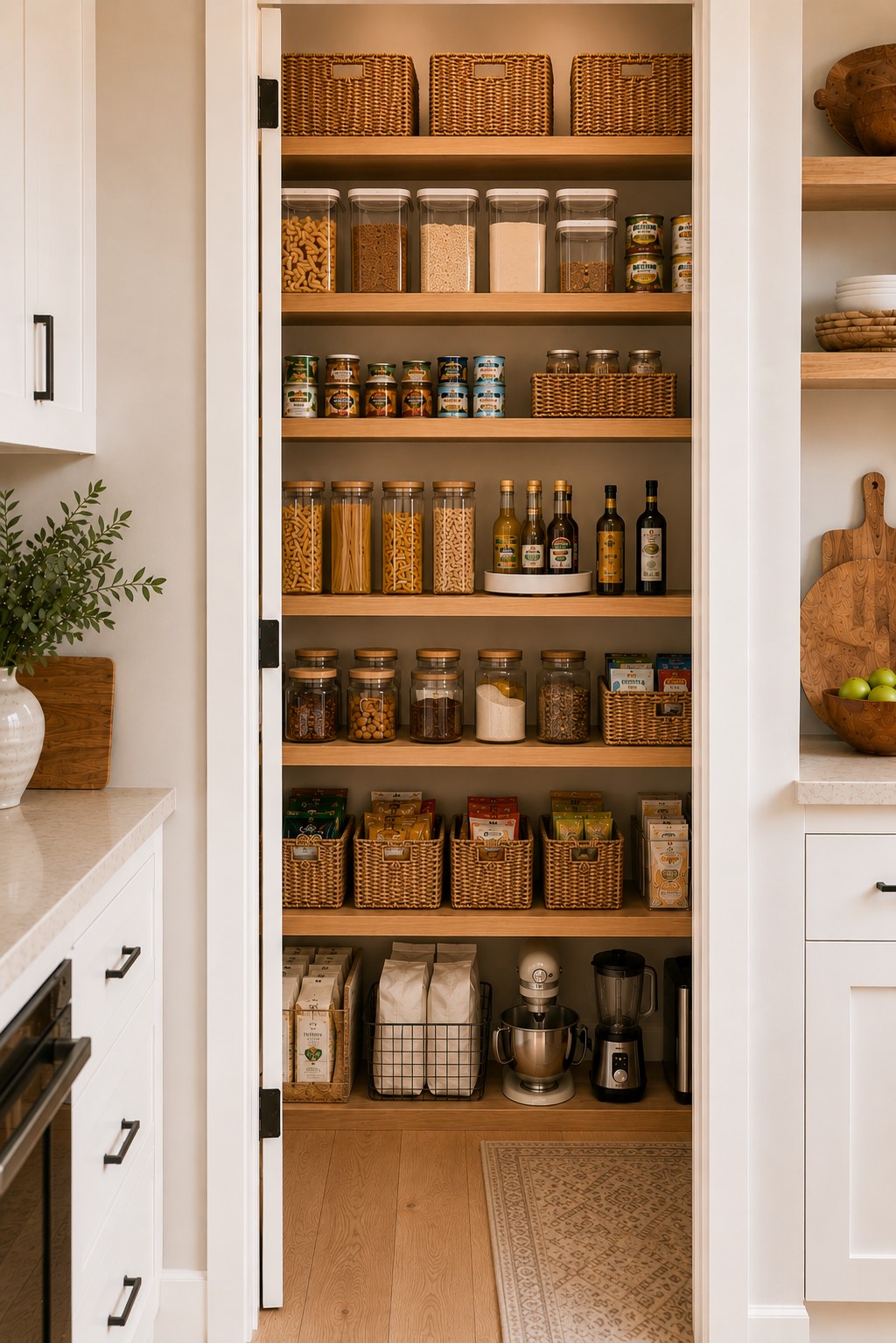
This is the step that takes a good pantry organisation and turns it into a great one. The right containers make your pantry look beautiful, keep food fresh for longer, and make it so easy to see exactly what you have at a glance.
The Best Types of Containers for a Pantry
Clear glass jars are perfect for things like pasta, rice, flour, sugar, oats, coffee, tea and lentils. You can see exactly how much is left without opening anything.
Clear plastic bins and baskets are great for grouping categories together. Put all your snacks in one basket. All your baking supplies in another.
When you need something you just pull the whole basket out. Lazy susans are brilliant for deeper shelves because they spin around so nothing ever gets lost at the back again. Stackable cans organisers let you store more cans in less space and they automatically roll the oldest ones to the front so nothing expires without you noticing.
You do not need to buy everything at once. Start with the category that causes you the most daily frustration and invest in good containers for that one first. Then build from there over time.
And if you are working with a very deep pantry where things constantly disappear at the back, this guide on how to organize a deep pantry so nothing gets lost goes into much more specific detail on exactly how to tackle that particular challenge.
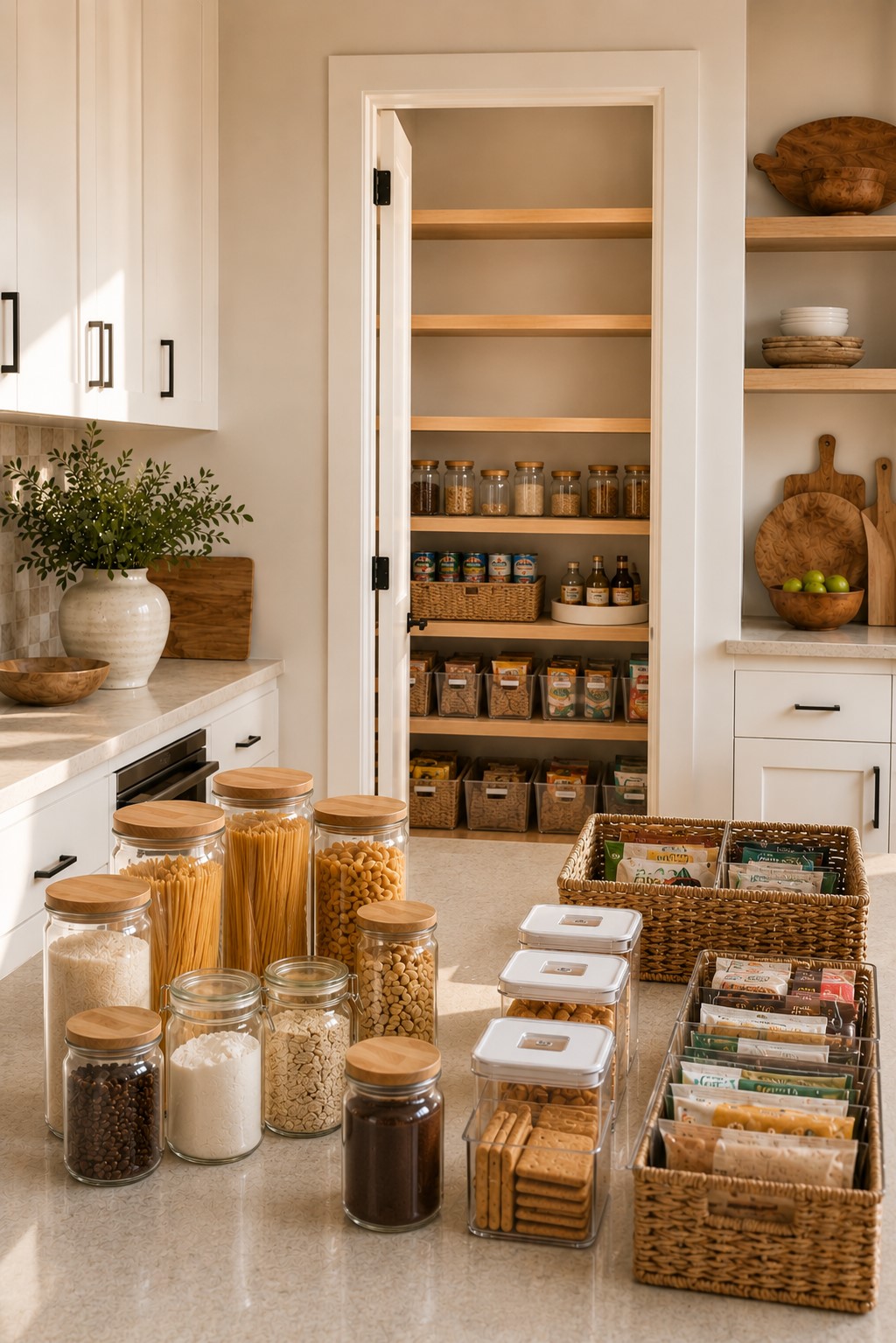
Assign Every Category Its Own Zone
Now that you have your categories sorted and your containers chosen, it is time to decide where each category lives inside your pantry. This is called zoning and it is the backbone of any pantry system that actually stays organised long term.
The basic principle is simple. The things you use most often should be the easiest to reach. The things you use occasionally can live in harder to reach spots.
Save this idea: How to Choose the Right Kitchen Backsplash for Your Style
How to Zone Your Pantry Shelves
Eye level shelves are prime real estate. This is where your most used everyday items belong. Think cooking oils, everyday spices, the pasta and rice you cook with every week, snacks you reach for daily, and your coffee and tea.
The shelves just above eye level are for things you use regularly but not every single day. Canned goods, extra sauces, baking supplies and breakfast items work well here. The highest shelves are for things you use occasionally.
Bulk purchases, specialty ingredients you use for specific recipes, and anything you only reach for a few times a month. The lowest shelves are great for heavy items like large bottles of oil, bulk bags of flour or rice, and bulky appliances or equipment you store in the pantry.
When your zones match your actual cooking habits, you stop doing that thing where you pull six things out to get to the one thing you actually need. Everything you reach for most is right there waiting for you.
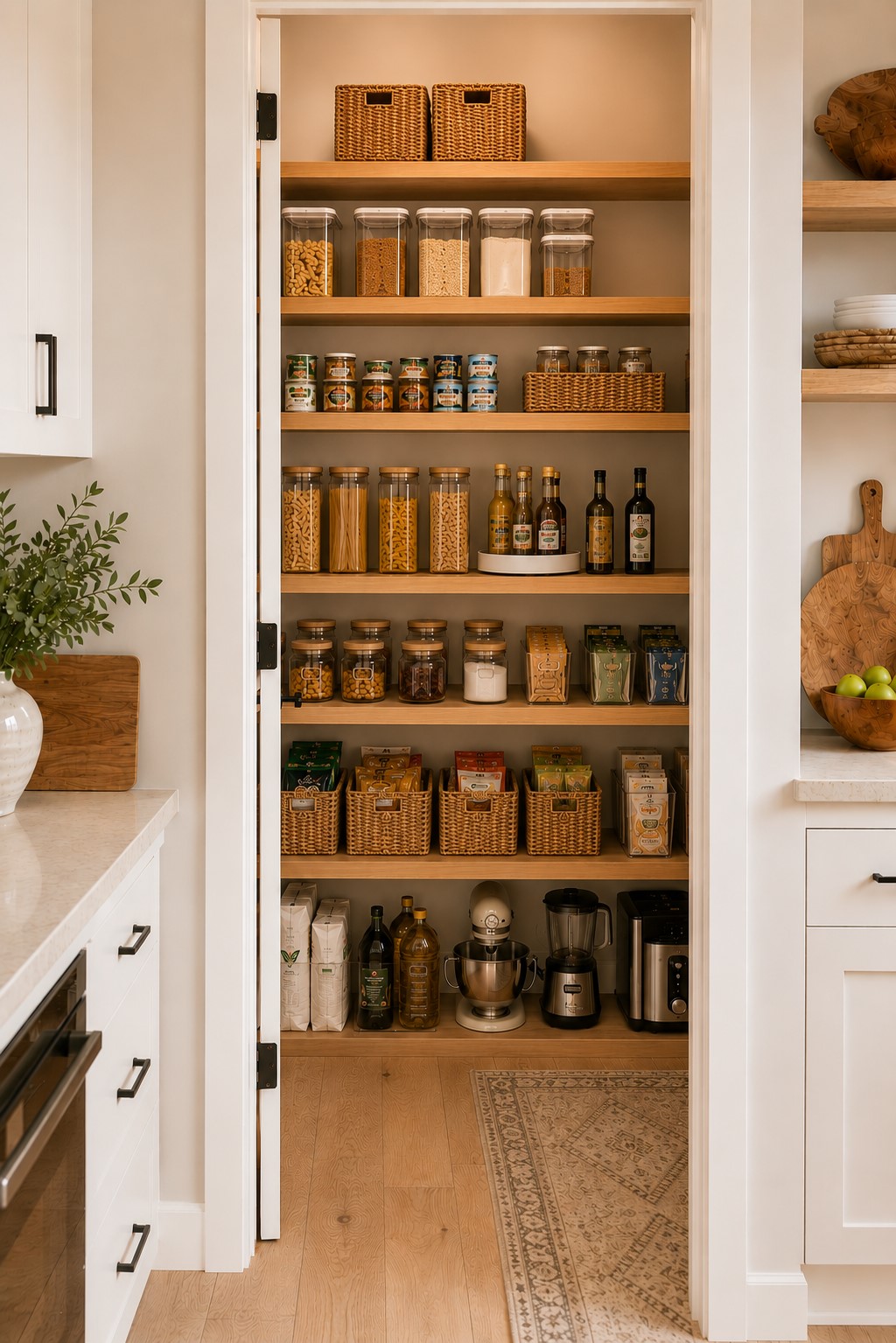
Label Everything and Mean It
This is the step that separates a pantry that stays organised from one that slowly slides back into chaos within a few weeks.
Labels are not just for people with perfect aesthetically pleasing pantries on social media. They are genuinely practical tools that make your system self maintaining. When everything is labelled, everyone in your household knows where things go. Things get put back in the right spot without anyone having to think about it or ask.
You’ll thank yourself later: Farmhouse Kitchen Decor Ideas That Feel Warm and Inviting
The Best Ways to Label Your Pantry
A simple label maker is the cleanest and most durable option. The labels look neat, they stick well and they are easy to replace when you need to. Chalkboard labels that you write on with chalk or chalk markers are beautiful and reusable. Printable labels that you design yourself and print at home give you complete control over the look.
Even simple masking tape and a marker works perfectly fine if you want to get started right now without buying anything.
Label your bins and baskets with the category name. Label your jars with what is inside and if you want to go the extra mile, add the expiry date too. Label your shelves if it helps your household remember where each zone lives.
It sounds like a lot but once it is done it requires almost no ongoing effort and it keeps your whole system running smoothly on autopilot.

Handle Your Spices Separately
Spices deserve their own dedicated conversation because they are one of the most chaotic elements in most pantries and they cause a disproportionate amount of daily frustration.
Most people have their spices scattered across the pantry with no real logic. Some are lying on their sides. Half of them have lost their labels. Finding the one you need while you are actively cooking means picking up and reading every single jar until you find it.
Bookmark this post: Kitchen Countertop Decor Ideas That Are Both Pretty and Practical
The Best Spice Storage Solutions for a Pantry
A tiered spice rack that sits on a shelf puts every jar at an angle so you can read all the labels at once without moving anything. A deep drawer with a spice insert lays everything flat so you look straight down and see every label immediately.
Magnetic spice jars on a mounted strip inside the pantry door free up shelf space entirely and look incredibly clean. Alphabetical organisation sounds overly organised but if you cook with a lot of spices it genuinely saves you time every single day.
Go through your spices while you are doing this overhaul and throw out anything that has been open for more than a year. Old spices do not make you sick but they have lost most of their flavour and that quietly affects your cooking more than you might realise. For a complete deep dive on this, the best spice organisation ideas every home cook needs covers every option in much more detail.
Set Up a First In First Out System
This is what grocery stores do and it is one of the smartest habits you can bring into your home pantry.
The idea is simple. When you bring new groceries home, the newer items go at the back and the older items come to the front. That way you always use the oldest things first and nothing sits forgotten at the back until it expires.
Pin this for later: How to Style Open Shelves in Your Kitchen Like a Pro
How to Make This Habit Stick Without Thinking About It
With canned goods, always put new cans behind existing ones. With jars and bottles, bring older ones to the front when you add new stock. With packets of pasta, grains and cereals, use what is already open before opening a new one. Can organisers that automatically roll cans forward do this job for you completely passively which is why they are such a good investment.
Once this habit is in place you will stop throwing away expired food almost entirely. And that saves you real money over time.
You’ll want to come back to this: How to Style Open Shelves in Your Kitchen Like a Pro
Keep a Running Inventory of What You Have
This might sound more organised than you feel like being right now. But hear me out because this one habit genuinely changes how you grocery shop.
When you know exactly what is in your pantry, you stop buying things you already have. You stop running out of things mid recipe. And you stop standing in the supermarket trying to remember whether you have enough flour at home.
Don’t lose this list: 40 Kitchen Decor Ideas That Instantly Make Your Home Feel Cozy
Simple Ways to Keep Track of Your Pantry
A small whiteboard or chalkboard inside your pantry door where you write down things as you run low. A notes app on your phone where your pantry list lives and gets updated when you use the last of something.
A simple printed pantry inventory sheet inside a plastic sleeve that you update with a dry erase marker.
You do not need anything complicated. Just a system that makes it easy to know what you have and what you need before you go shopping.
Keep this handy: 41 Small Kitchen Organization Ideas That Double Your Storage
How to Keep Your Pantry Looking This Good Long Term
Getting your pantry organised from scratch is one thing. Keeping it that way is where most people struggle. But with the right small habits in place it honestly does not take much effort at all.
Do a quick five minute tidy of your pantry once a week. The best time is right before you go grocery shopping so you can see exactly what you have before you buy more. When something comes out of the pantry, it goes back in the right spot every single time.
When you bring new groceries home, take two minutes to put them away properly rather than just shoving them in wherever there is space. Do a bigger audit every three to four months where you check expiry dates and reassess whether your zones still make sense for how you are cooking.
The pantry is one of those spaces where a little consistent effort pays back enormous dividends in your daily life. A well organised pantry makes cooking feel lighter, grocery shopping feel smarter, and your whole kitchen feel more under control.
And once your pantry is working this well, you will naturally start wanting the rest of your kitchen to match that same calm organised energy. A great place to continue is these 15 small kitchen decor ideas that make any kitchen look expensive because a kitchen that functions well and looks beautiful is the ultimate goal.
Your Pantry Can Genuinely Change How You Cook
Here is what I want you to take away from all of this. An organised pantry is not just about tidiness or aesthetics. It genuinely changes your relationship with cooking.
When you know exactly what you have, cooking becomes creative and enjoyable instead of stressful. You stop wasting food and money. You stop making unnecessary trips to the supermarket. You stop standing in front of an open pantry door feeling overwhelmed by your own groceries.
Start today with just one shelf. Pull everything off it, wipe it down, put back only what belongs there and label it clearly. Then do the next shelf tomorrow. Before the end of the week your whole pantry could look and feel completely different.
You deserve a kitchen that works for you and it starts right here.
Leave a Reply